Building distributed systems is complex.
As systems grow and scale across multiple services, teams face challenges like service communication, data consistency, fault tolerance, and deployment strategies.
The good news is that many of these challenges have well-established solutions in the form of design patterns. These patterns are battle-tested approaches that architects and engineers use to solve common problems in distributed architectures.
Understanding these patterns helps you make better architectural decisions, avoid common pitfalls, and build systems that are resilient, scalable, and maintainable.
In this post, we will explore 12 distributed system Design Patterns that every architect should know:
- API Gateway
- Point To Point Async Integration
- Publish/Subscribe Pattern
- Outbox Pattern
- CQRS (Command Query Responsibility Segregation)
- Saga Pattern
- Sidecar Pattern
- Strangler Fig Pattern
- Anti-Corruption Layer Pattern
- Service Discovery Pattern
- Sharding Pattern
- Replication Pattern
Let's dive in.
1. API Gateway
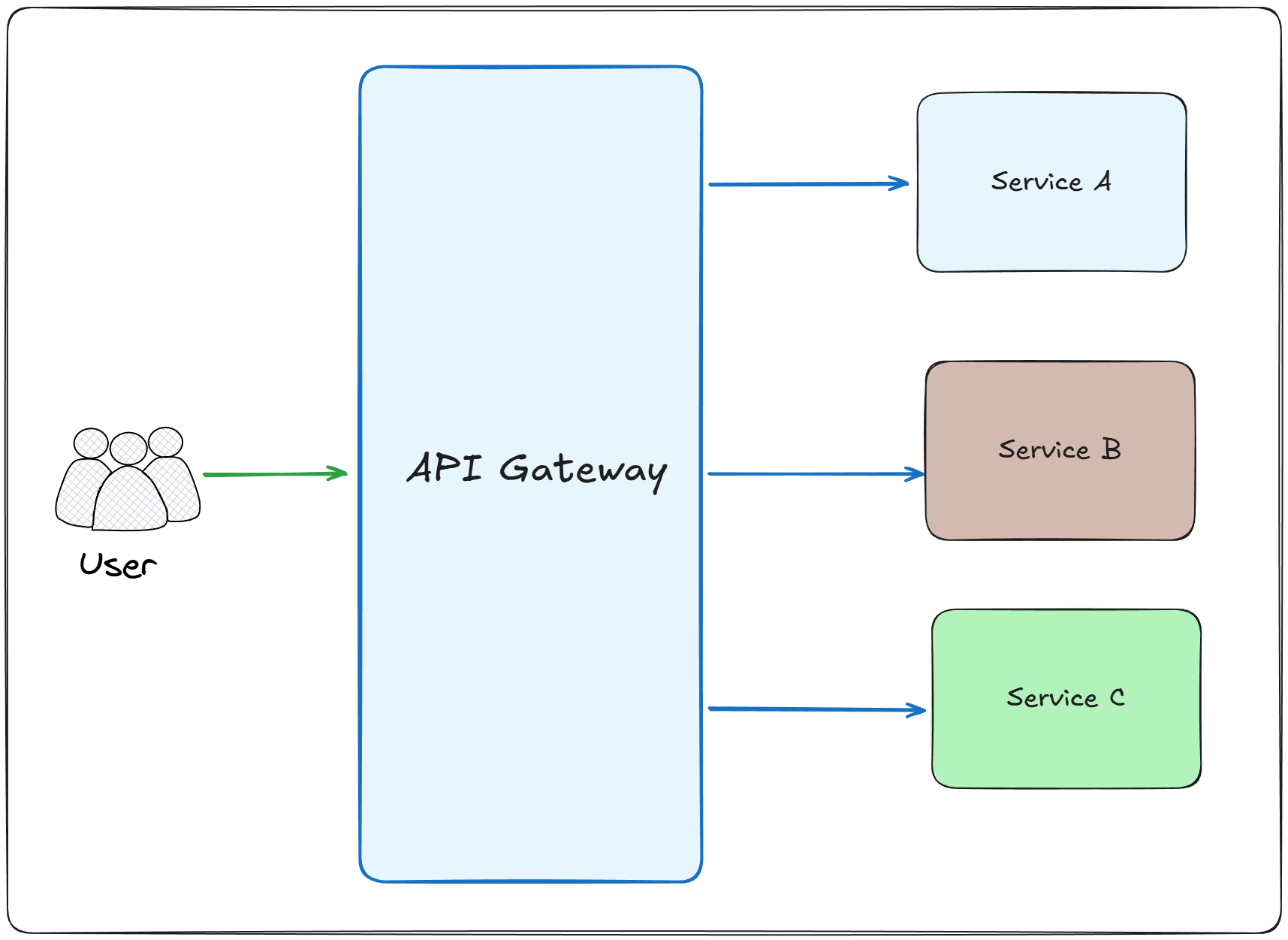
An API Gateway is a single entry point that sits between clients and your backend services. It acts as a reverse proxy that routes requests to the appropriate microservices. It often handles cross-cutting concerns like authentication, rate limiting, and request transformation.
How it works:
- The client sends all requests to a single API Gateway endpoint instead of calling individual services directly
- The API Gateway receives the incoming request and performs authentication and authorization checks
- It applies rate limiting and throttling rules to protect backend services from overload
- The gateway routes the request to the appropriate microservice based on the URL path or request headers
- It can aggregate responses from multiple services into a single response for the client
Benefits:
- Simplifies client implementation by providing a single endpoint instead of managing multiple service endpoints
- Provides a layer of abstraction that allows backend services to change without affecting clients
- Improves security by hiding internal service structure and endpoints from external clients
Drawbacks:
- Introduces a single point of failure that can bring down the entire system if not properly designed
- Can become a performance bottleneck when handling high traffic volumes
- Adds latency to every request due to the additional network roundtrips
Use cases:
- Microservices architectures where multiple services need to be exposed through a unified interface
- Systems that require consistent authentication and authorization across multiple services
- Legacy system modernization where you need to facade old services behind a modern API
2. Point To Point Async Integration
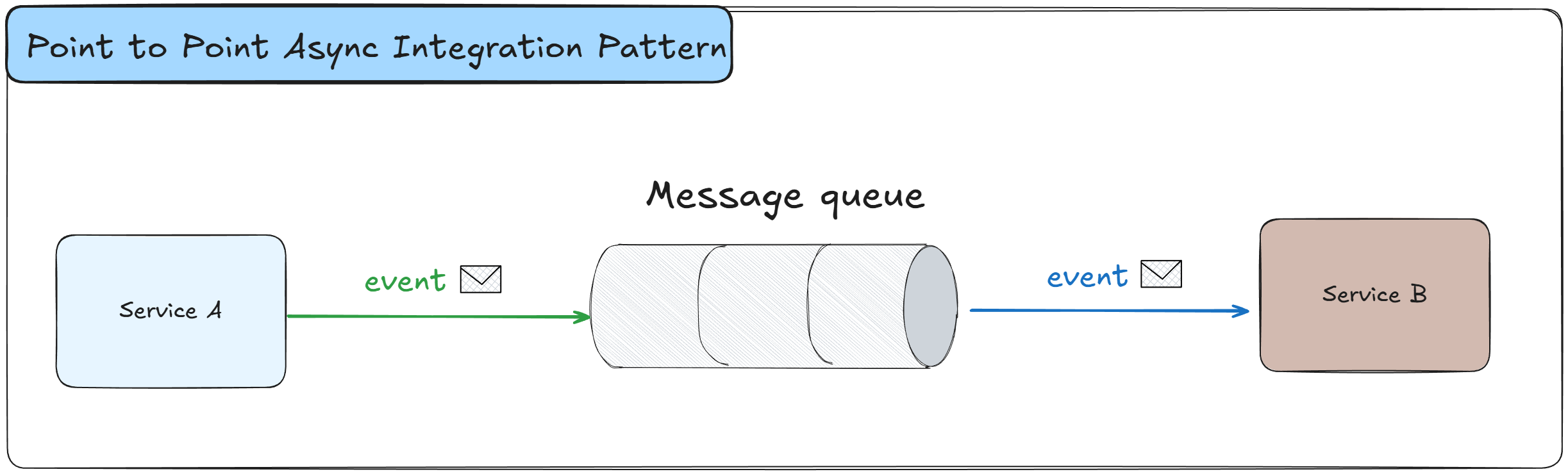
Point To Point Async Integration is a communication pattern where one service sends messages to another service through a message queue.
Unlike synchronous calls, the sender does not wait for an immediate response and continues processing, while the receiver consumes messages from its queue at its own pace.
This creates an asynchronous but still direct relationship between two services.
How it works:
- Service A sends a message to a dedicated queue that only Service B consumes from
- The message queue acts as a buffer between the sender and receiver, storing messages until consumed
- Service A continues processing immediately after sending the message without waiting for a response
- Service B processes messages from its queue independently at its own pace
- The message broker guarantees message delivery and can persist messages for reliability
- If Service B is temporarily unavailable, messages accumulate in the queue until it recovers
- Dead letter queues can handle messages that fail processing after multiple retry attempts
Benefits:
- Decouples services in time, allowing sender and receiver to operate at different speeds
- Improves resilience as temporary failures in the receiver don't affect the sender
- Provides natural load leveling as the queue buffers messages during traffic spikes
- Enables asynchronous processing for long-running operations without blocking the sender
- Simplifies scaling the receiver independently by adding more consumer instances
Drawbacks:
- Introduces message broker as a dependency that must be managed and can become a single point of failure
- Creates eventual consistency as the sender doesn't know when or if the message was processed successfully
- Makes debugging more difficult as message flow is asynchronous and indirect
Use cases:
- Background job processing where immediate responses are not required
- Order processing systems where orders are queued for fulfillment services
- Email or notification services that process requests asynchronously
- Systems with uneven load patterns where queues provide buffering
3. Publish/Subscribe Pattern
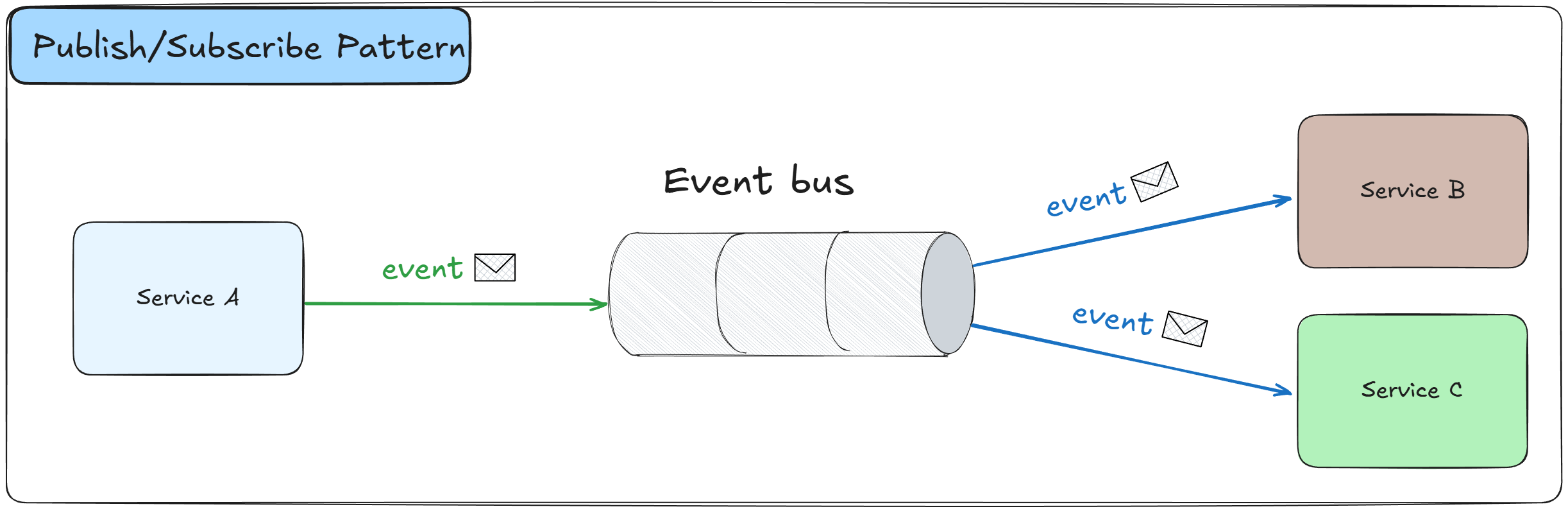
The Publish/Subscribe Pattern is an asynchronous messaging pattern where publishers send messages to a central message broker or event bus without knowing who will consume them.
Subscribers register their interest in specific types of messages and receive them automatically when they are published, creating a loosely coupled event-driven architecture.
Here is the main difference between Publish/Subscribe and the Point To Point Async Integration pattern:
- Publish/Subscribe assumes that there can be multiple subscribers for a single event type
- Point To Point Async Integration assumes there is only one subscriber for each event type
How it works:
- Publishers send messages or events to topics or channels on a message broker without knowing about subscribers
- The message broker receives and stores messages, managing the distribution to multiple subscribers
- Subscribers register their interest in specific topics or event types they want to receive
- When a message is published, the broker automatically delivers copies to all active subscribers
- Multiple subscribers can receive the same message independently, each processing it according to their needs
- The pattern supports one-to-many communication where a single event triggers multiple actions
- Subscribers can be added or removed without requiring changes to the publisher
- Message filtering can be applied so subscribers only receive messages matching specific criteria
Benefits:
- Decouples publishers from subscribers, allowing independent development and deployment of services
- Enables scalability by allowing multiple subscribers to process messages in parallel
- Supports event-driven architectures where services react to changes rather than polling for updates
- Makes it easy to add new functionality by introducing new subscribers without modifying existing code
- Improves system resilience as failures in one subscriber don't affect publishers or other subscribers
Drawbacks:
- Introduces message broker as a dependency that must be managed and can become a single point of failure
- Makes debugging and tracing more difficult as message flow is asynchronous and indirect
- Can lead to eventual consistency challenges as different subscribers process messages at different times
- Requires careful design to avoid message ordering issues and duplicate message handling
Use cases:
- Event-driven architectures where multiple services need to react to the same business events
- Systems that require real-time notifications to multiple consumers like chat applications or dashboards
- Microservices that need to maintain data consistency through integration events
- Integration scenarios where new services need to consume existing events without modifying publishers
- Workflows that involve multiple steps handled by different services, triggered by a single event
4. Outbox Pattern
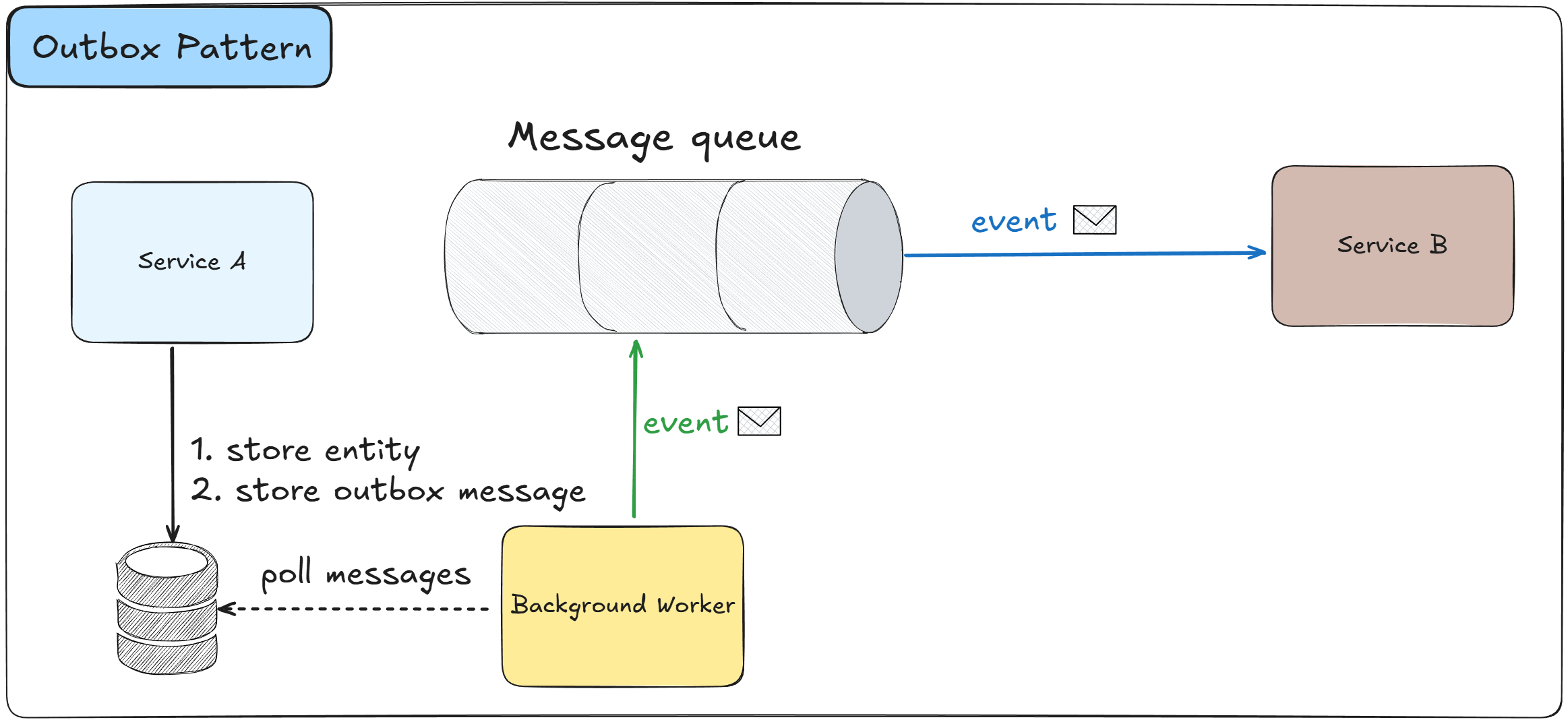
The Outbox Pattern ensures reliable event publishing by storing events in a database table (the outbox) within the same transaction as the business data changes.
A separate process reads from the outbox and publishes events to the message broker, guaranteeing that events are published if and only if the business transaction succeeds.
How it works:
- When a service modifies business data, it also inserts event records into an outbox table within the same database transaction
- The database transaction ensures atomicity between business data changes and event creation
- A separate background process or worker continuously polls the outbox table for unpublished events
- The background process reads events from the outbox and publishes them to the message broker
- Once an event is successfully published, it is marked as processed or deleted from the outbox table
- If publishing fails, the event remains in the outbox and will be retried automatically
- The pattern eliminates the dual-write problem where data is saved but events fail to publish
- Events are guaranteed to be published at least once, though subscribers must handle potential duplicates
Benefits:
- Guarantees that events are published if the business transaction succeeds, preventing data inconsistencies
- Eliminates the dual-write problem where database commits succeed but message publishing fails
- Provides a reliable audit trail of all events in the system stored in the database
- Allows for event replay and recovery scenarios by keeping a history of published events
Drawbacks:
- Introduces eventual consistency as events are not published immediately but after polling
- Requires additional infrastructure for the outbox processor and monitoring
- Can create performance overhead due to additional database writes and polling operations
- Needs careful handling of duplicate events on the consumer side due to at-least-once delivery (you can use InBox pattern with Idempotence checks to avoid this)
Use cases:
- Microservices that need to guarantee event publication after data changes
- Systems implementing event sourcing where every state change must be captured as an event
- Any scenario where data consistency between services is critical and message loss is unacceptable
5. CQRS (Command Query Responsibility Segregation)
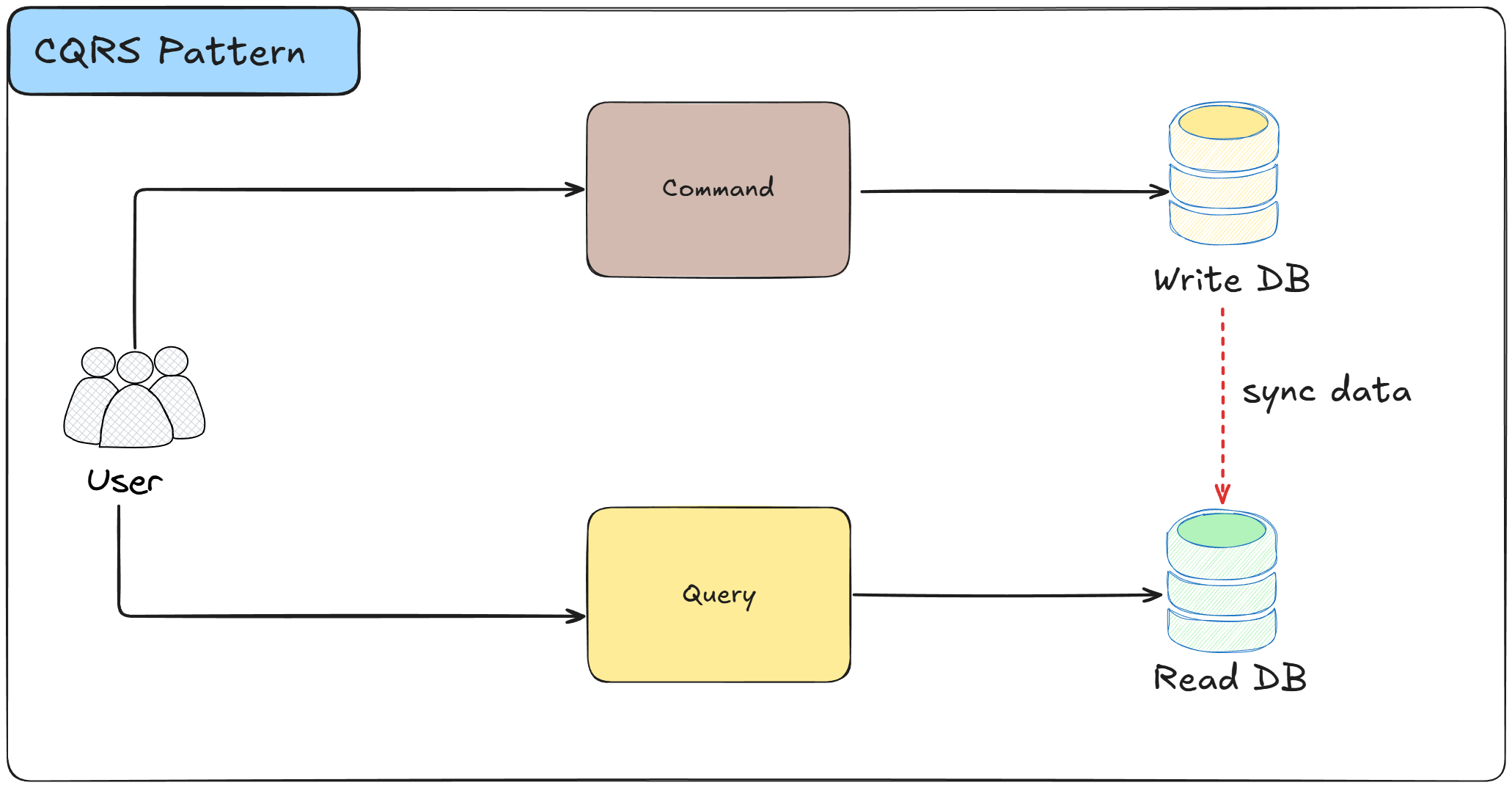
CQRS is a pattern that separates read operations (queries) from write operations (commands) by using different models for each. The write model handles business logic and data modifications, while the read model is optimized for querying and reporting.
How it works:
- Commands represent actions that change the system state and are processed through the write model
- The write model enforces business rules, validates data, and persists changes to the database
- Queries retrieve data through the read model without modifying any state
- The read model is often a separate database or data structure optimized for query performance
- Changes made through the write model are propagated to the read model asynchronously, often through events
Benefits:
- Allows independent optimization of read and write models for their specific performance requirements
- Enables scaling read and write operations separately based on actual usage patterns
- Simplifies complex domain models by separating command validation logic from query logic
Drawbacks:
- Introduces eventual consistency between write and read models
- Increases system complexity with multiple models and synchronization mechanisms
- Requires additional infrastructure to keep read and write models synchronized
Use cases:
- Applications with significantly different read and write loads requiring independent scaling
- Complex domains where business logic for writes differs greatly from reporting requirements
- Systems with high read-to-write ratios where query performance is critical
6. Saga Pattern
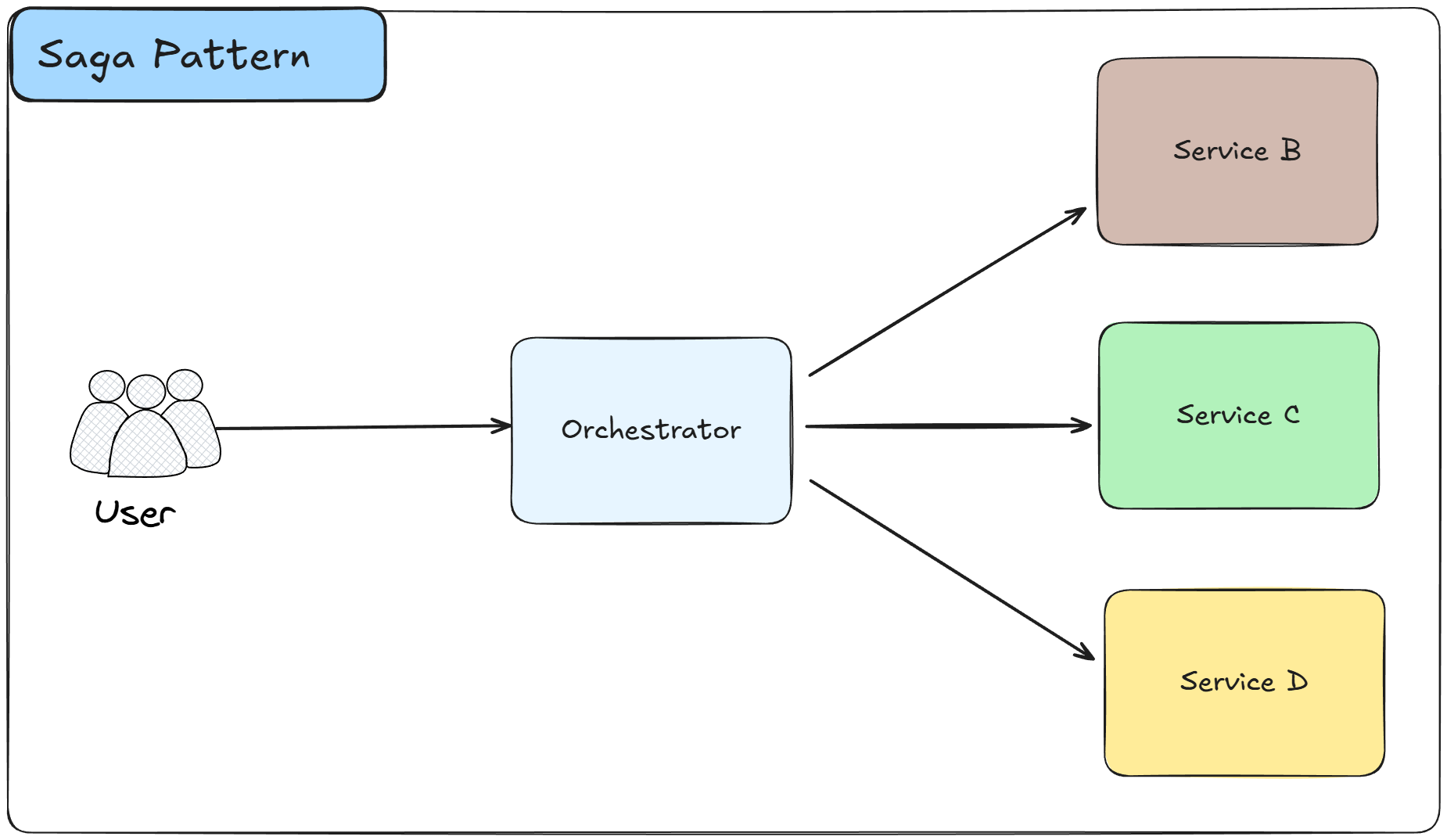
The Saga Pattern manages distributed transactions across multiple services by breaking them into a sequence of local transactions. Each local transaction updates data within a single service and publishes an event or message to trigger the next step.
If any step fails, compensating transactions are executed to undo the changes made by previous steps, maintaining data consistency across services.
How it works:
- A saga is initiated when a business process requires changes across multiple services
- The saga coordinator breaks the distributed transaction into a sequence of local transactions, one per service
- Each service executes its local transaction and publishes an event indicating success or failure
- The coordinator listens to these events and triggers the next step in the sequence
- If all steps complete successfully, the saga finishes and the distributed transaction is considered complete
- If any step fails, the coordinator executes compensating transactions in reverse order to undo previous changes
- There are two implementation approaches: choreography (services coordinate through events) and orchestration (central coordinator manages the flow)
Benefits:
- Enables distributed transactions across microservices without requiring distributed locks or two-phase commits
- Maintains data consistency through compensating transactions instead of rollbacks
- Allows long-running business processes to span multiple services with better fault tolerance
- Scales well as each service manages its own local transactions independently
Drawbacks:
- Introduces complexity in designing and implementing compensating transactions for every step
- Creates eventual consistency which can lead to temporary inconsistent states visible to users
- Makes debugging and monitoring more difficult as transactions span multiple services over time
- Can lead to complex error handling scenarios when compensating transactions themselves fail
Use cases:
- Multi-step workflows in enterprise systems where each step is handled by a different service
- Any business process that requires coordinated changes across multiple microservices without distributed locks
7. Sidecar Pattern
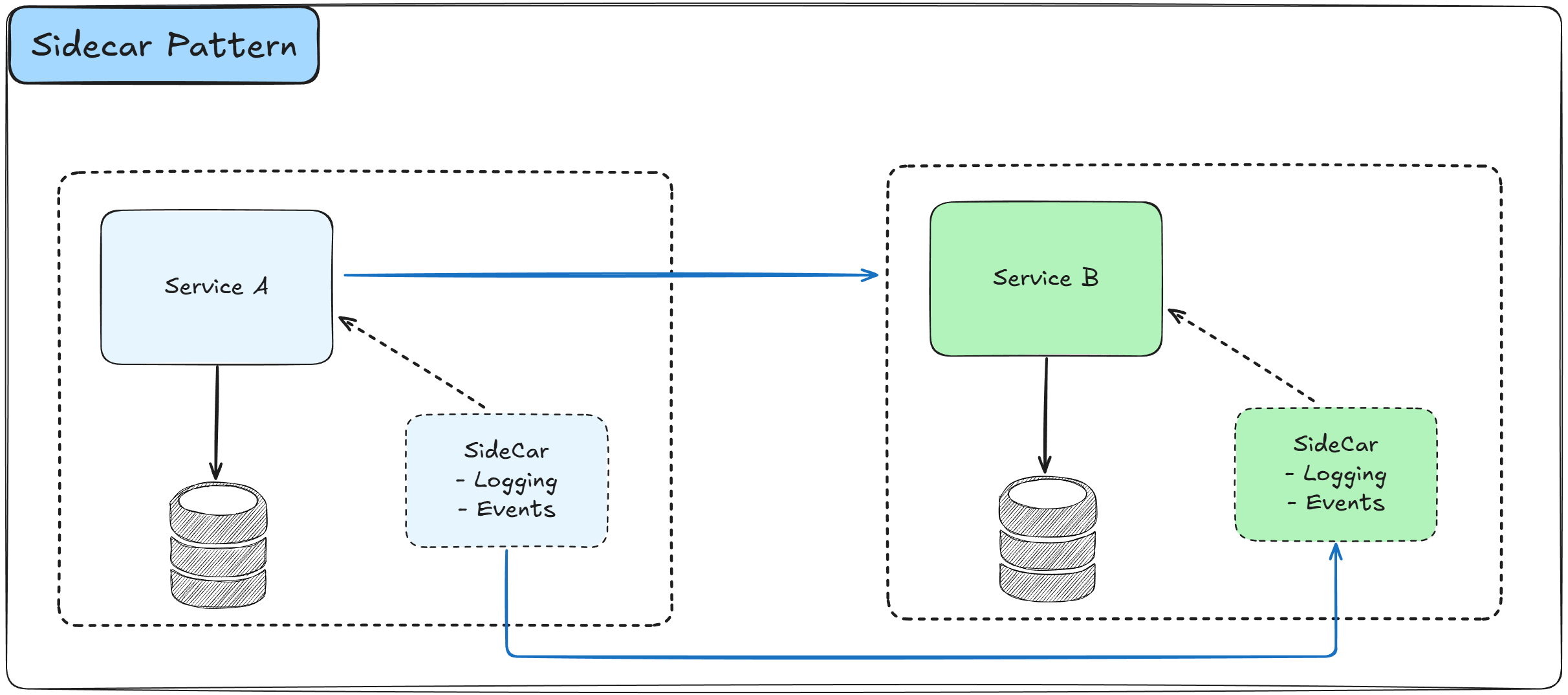
The Sidecar Pattern deploys a helper component alongside your main application container that provides supporting features like logging, monitoring, configuration, or networking capabilities.
The sidecar runs in the same execution environment as the main application and shares the same lifecycle, allowing it to extend functionality without modifying the application code.
How it works:
- A sidecar container is deployed alongside the main application container in the same container or host
- Both containers share the same network namespace, allowing communication through localhost
- The sidecar can intercept incoming and outgoing traffic and handle cross-cutting concerns like logging, metrics collection, or service mesh functionality
- Communication between the application and sidecar happens through local network calls
- Updates to sidecar functionality can be deployed independently without changing the application
- Multiple sidecars can be attached to a single application for different purposes
Benefits:
- Separates infrastructure concerns from application code, keeping the codebase focused on business logic
- Enables polyglot architectures as sidecars work with any application language or framework
- Simplifies application development by providing reusable infrastructure components
- Allows independent updates to infrastructure features without redeploying applications
- Reduces code duplication across services by centralizing common functionality in sidecars
Drawbacks:
- Increases resource consumption as each application instance runs additional sidecar containers
- Adds complexity to deployment configuration and orchestration
- Can introduce latency due to additional network hops between application and sidecar
Use cases:
- Service mesh implementations providing traffic management, security, and observability
- Centralized logging where sidecars collect and forward application logs to logging systems
- Configuration management where sidecars fetch and update configuration dynamically
- Event-driven integration where the sidecar handles messaging through pluggable queue implementations (e.g., Kafka, RabbitMQ, Azure Service Bus) allowing seamless switching between them without modifying the main application (e.g., using Dapr).
8. Strangler Fig Pattern
The Strangler Fig Pattern is a gradual migration strategy that replaces a legacy system by incrementally building a new system around it.
This pattern routes new functionality to the new system while the legacy system continues handling existing features until it is completely replaced and can be retired.
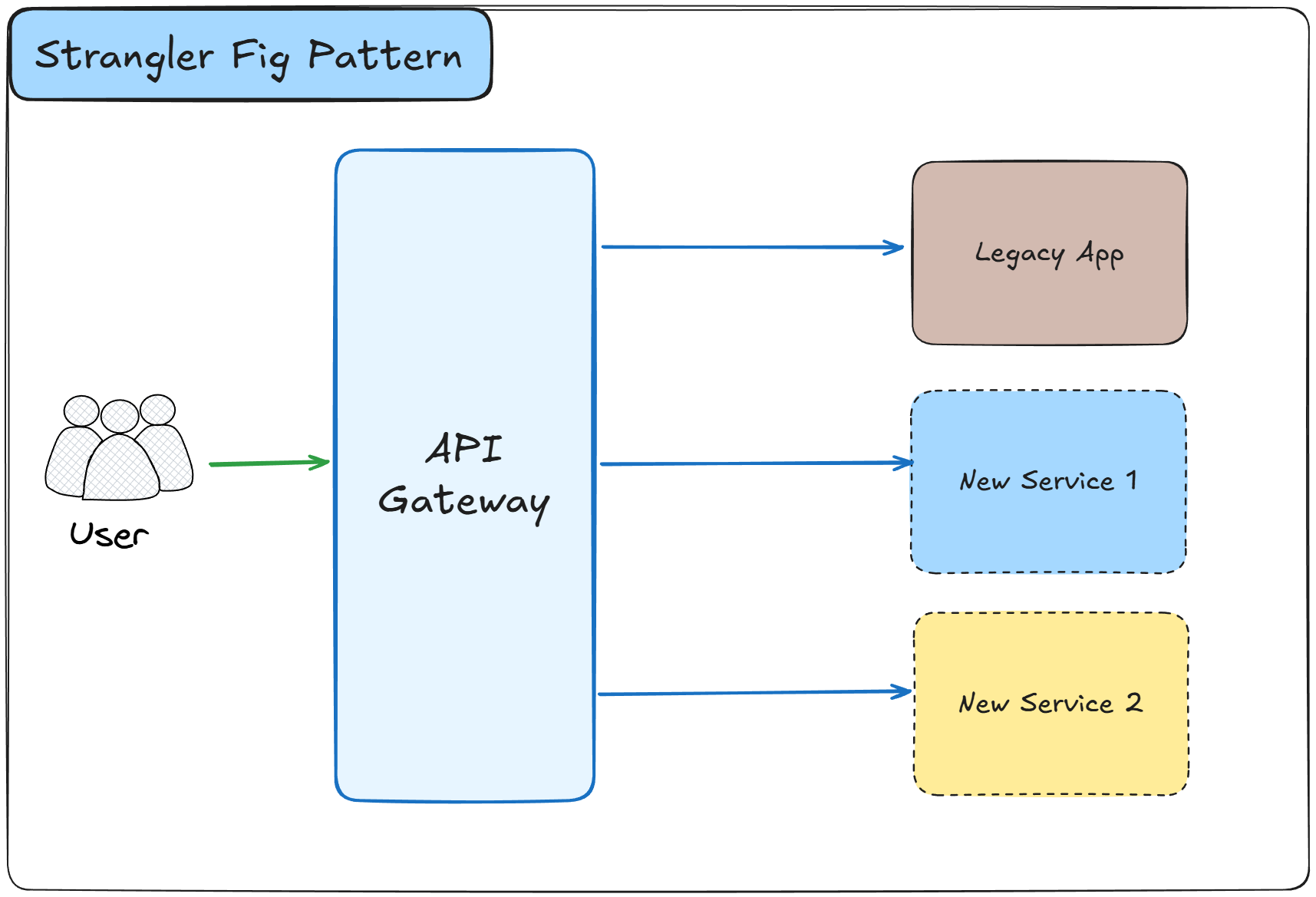
How it works:
- A facade or routing layer is placed in front of the legacy system to intercept all incoming requests
- New features are implemented in the new system instead of the legacy codebase
- The routing layer directs requests to either the legacy system or the new system based on the feature
- Existing functionality is gradually migrated from the legacy system to the new system in small increments
- Both systems run in parallel during the migration period, with the legacy system handling less over time
Benefits:
- Reduces risk by allowing gradual migration instead of risky big-bang rewrites
- Enables continuous delivery of value as new features can be released during migration
- Minimizes disruption to users as the system remains operational throughout the migration
Drawbacks:
- Increases operational complexity by requiring maintenance of two systems simultaneously
- Requires additional infrastructure for routing, synchronization, and data consistency
- Makes testing more complex as both systems need to be validated during the transition
Use cases:
- Modernizing legacy monolithic applications by migrating to microservices architecture
- Replacing outdated technology stacks with modern frameworks and languages
- Moving on-premises systems to cloud-based solutions incrementally
- Refactoring systems with poor code quality or technical debt
- Any large-scale system replacement where downtime and risk must be minimized
9. Anti-Corruption Layer Pattern
The Anti-Corruption Layer Pattern creates a protective boundary between your domain model and external systems or legacy code.
This layer translates between different models, preventing external concepts and structures from polluting your domain design and allowing your system to evolve independently.
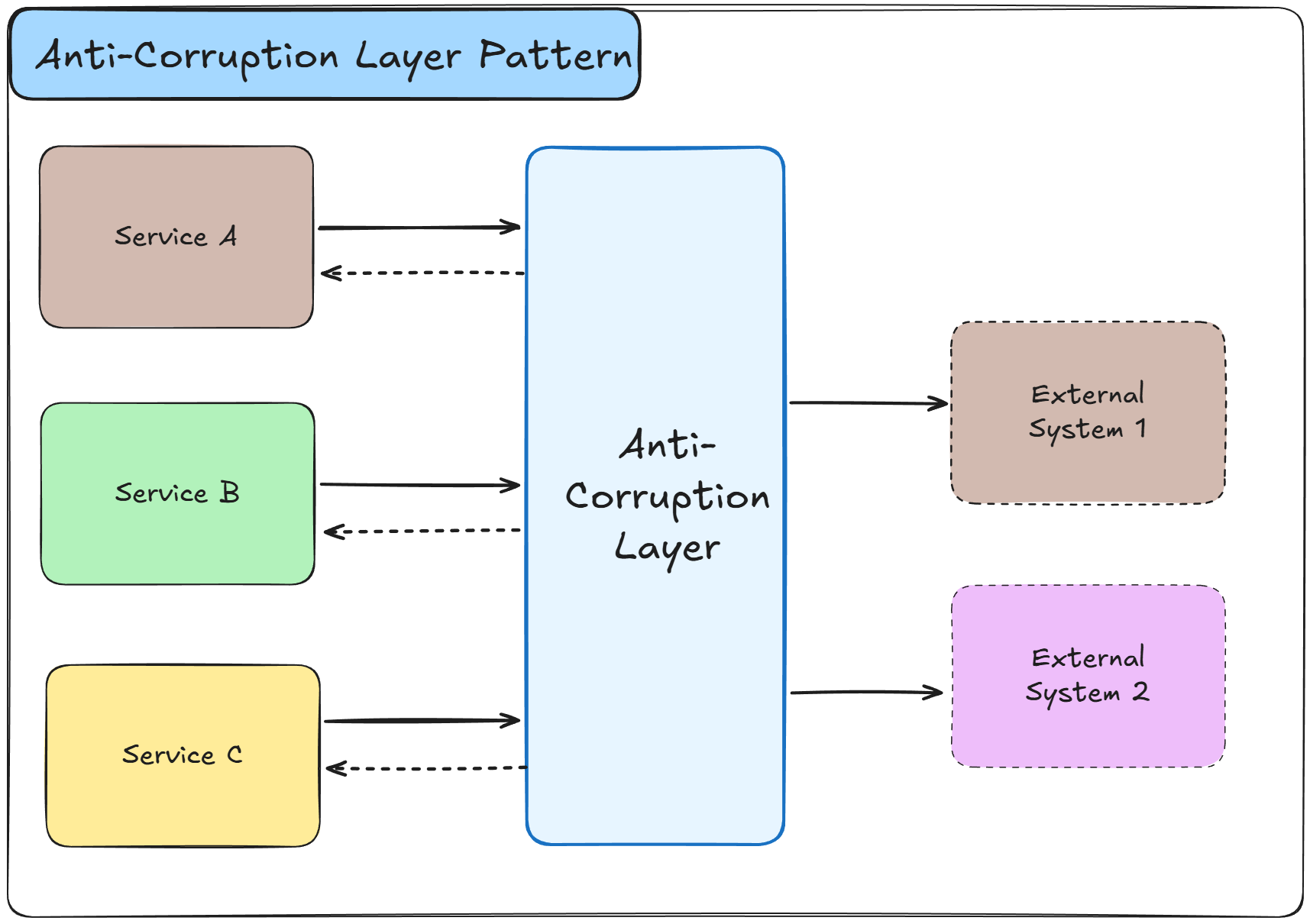
How it works:
- An anti-corruption layer sits between your domain model and external systems or legacy services
- The layer acts as a translator, converting external data structures and concepts into your domain language
- When your system needs data from external sources, the layer fetches it and transforms it
- Your domain code only interacts with the anti-corruption layer, never directly with external systems
- The layer shields your domain from changes in external systems by absorbing the integration complexity
- It can aggregate multiple external calls into single domain operations
Benefits:
- Protects your domain model from external changes, keeping it clean and focused on business logic
- Allows your system to evolve independently without being constrained by external system designs
- Simplifies testing by providing a clear boundary for mocking external dependencies
- Makes it easier to replace external systems as integration logic is centralized in one layer
Drawbacks:
- Adds development effort as translation logic must be written and maintained
- Introduces an additional layer that can impact performance due to data transformation overhead
- Requires careful design to avoid the layer itself becoming a bottleneck or overly complicated
Use cases:
- Integrating with third-party APIs that have different domain models or terminologies
- Protecting microservices from legacy system complexities during gradual modernization
- Working with external systems that have poor data models or inconsistent interfaces
- Building systems that need to remain stable despite frequent changes in external dependencies
10. Service Discovery Pattern
The Service Discovery Pattern enables services to find and communicate with each other dynamically without hardcoding network locations.
As services scale up or down, move between hosts, or get replaced, a service registry maintains an up-to-date map of available service instances and their network addresses, allowing clients to locate services automatically.
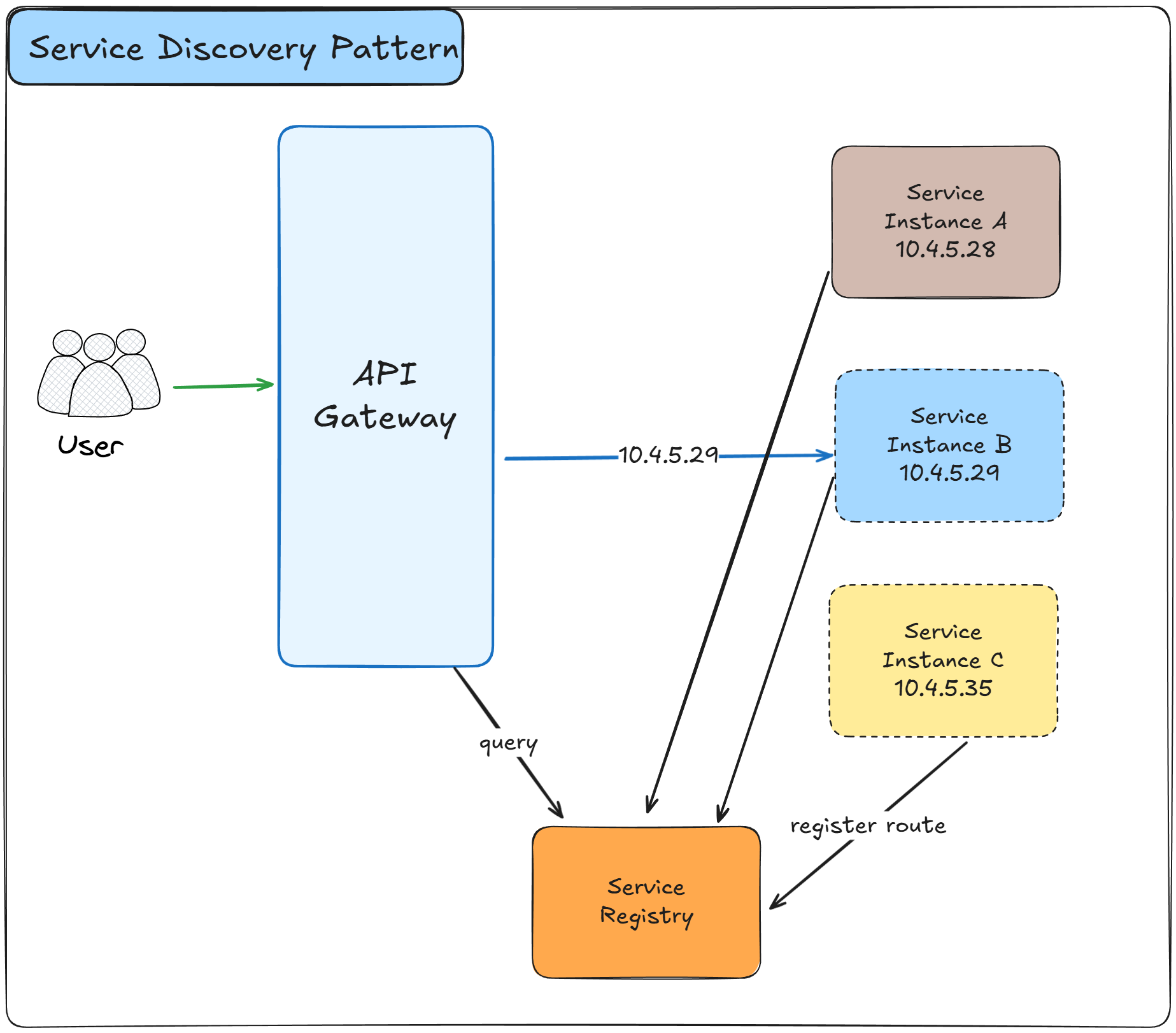
How it works:
- A central service registry maintains a catalog of all available service instances and their network locations
- When a service starts, it registers itself with the service registry, providing its address and metadata
- The service sends periodic heartbeats to the registry to indicate it is still healthy and available
- If a service fails to send heartbeats, the registry automatically removes it from the available instances list
- When a client needs to call a service, it queries the registry to get the current addresses of available instances
- The client receives a list of healthy service instances and selects one based on load balancing strategies
- There are two main approaches: client-side discovery where clients query the registry, and server-side discovery where a load balancer queries it
- The registry can be distributed across multiple nodes for high availability and fault tolerance
- Popular implementations include Consul, Eureka, etcd, and Kubernetes DNS-based service discovery
Benefits:
- Enables dynamic scaling as services can be added or removed without configuration changes
- Improves resilience by automatically routing traffic away from failed instances
- Simplifies deployment as services don't need to know the exact locations of dependencies
- Supports multiple environments and regions where service addresses differ
Drawbacks:
- Introduces the service registry as a critical dependency that must be highly available
- Adds network latency due to registry lookups before making service calls
- Increases complexity in the overall system architecture and deployment
Use cases:
- Microservices architectures with dynamic scaling where service instances change frequently
- Cloud-native applications deployed across multiple availability zones or regions
- Container orchestration platforms like Kubernetes managing hundreds of service instances
- Systems requiring automatic failover when service instances become unhealthy
11. Sharding Pattern
The Sharding Pattern divides data horizontally across multiple databases or storage nodes, with each shard containing a subset of the total data.
Data is distributed based on a sharding key, allowing the system to scale storage and processing capacity by adding more shards as data volume grows.
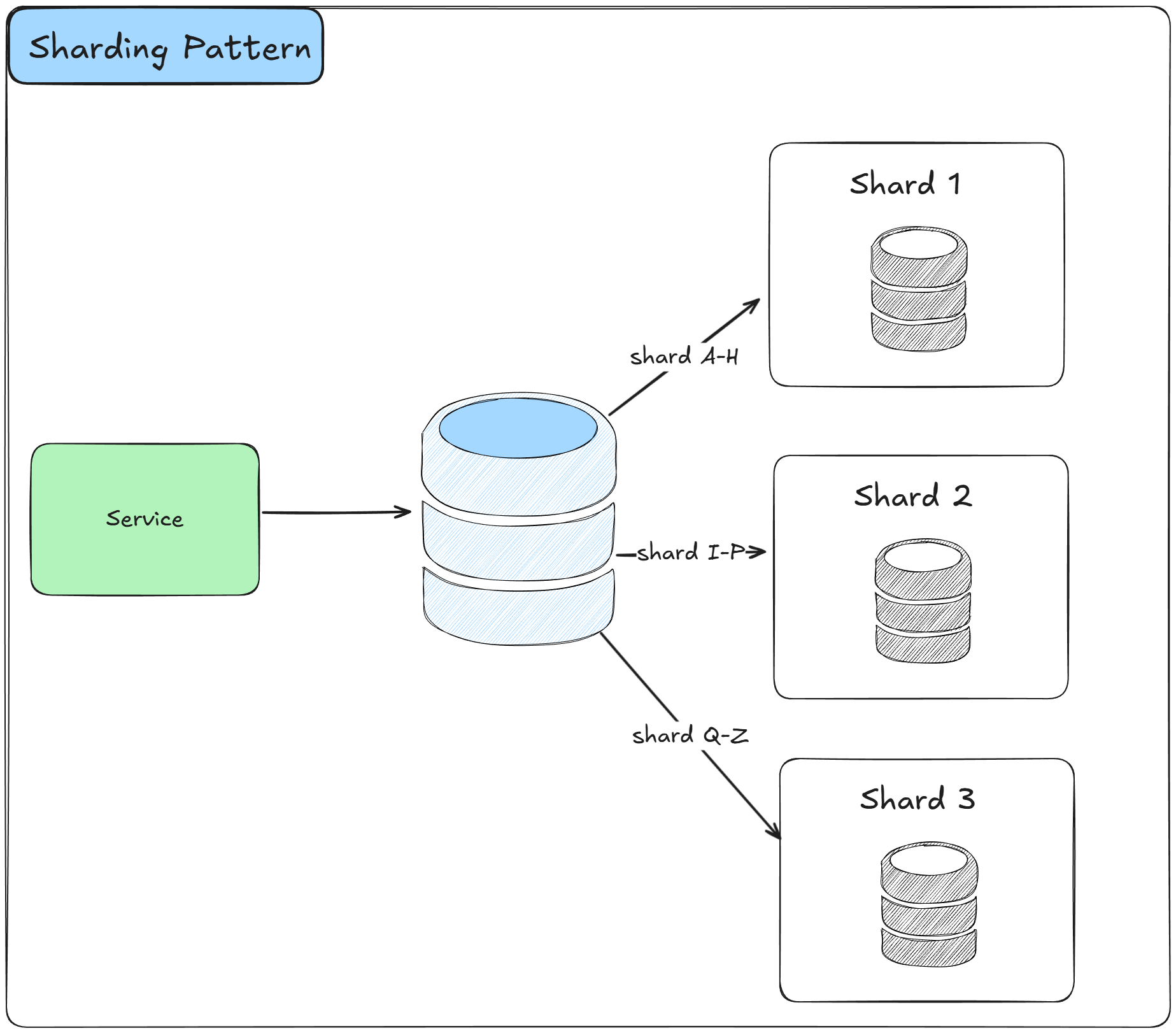
How it works:
- Data is partitioned horizontally based on a sharding key, such as user ID, geographic region, or hash value
- Each shard is a separate database instance that stores only a portion of the total dataset
- A routing layer or application logic determines which shard contains the requested data
- The sharding key is used to calculate which shard should handle each read or write operation
- Queries that access a single shard execute quickly by avoiding cross-shard operations
- Cross-shard queries require coordination across multiple shards, which is more complex and slower
- New shards can be added to distribute load as data volume increases
- Each shard can be scaled independently based on its specific load characteristics
- The pattern works best when data access patterns align with the sharding strategy
Benefits:
- Enables horizontal scaling of data storage beyond the limits of a single database
- Improves query performance by reducing the dataset size each database must handle
- Allows independent scaling of hot shards that receive more traffic
- Increases availability as failures affect only a subset of data rather than the entire system
Drawbacks:
- Introduces complexity in determining the optimal sharding key and strategy
- Makes cross-shard queries and transactions difficult, slow, and sometimes impossible
- Complicates database schema changes that must be applied across all shards
- Requires careful planning to avoid uneven data distribution creating hot spots
Use cases:
- Large-scale applications with data volumes exceeding single database capacity
- Multi-tenant SaaS platforms where data can be sharded by tenant ID
- Social media platforms sharding user data by geographic region or user ID
- E-commerce systems partitioning product catalogs and orders by category or seller
12. Replication Pattern
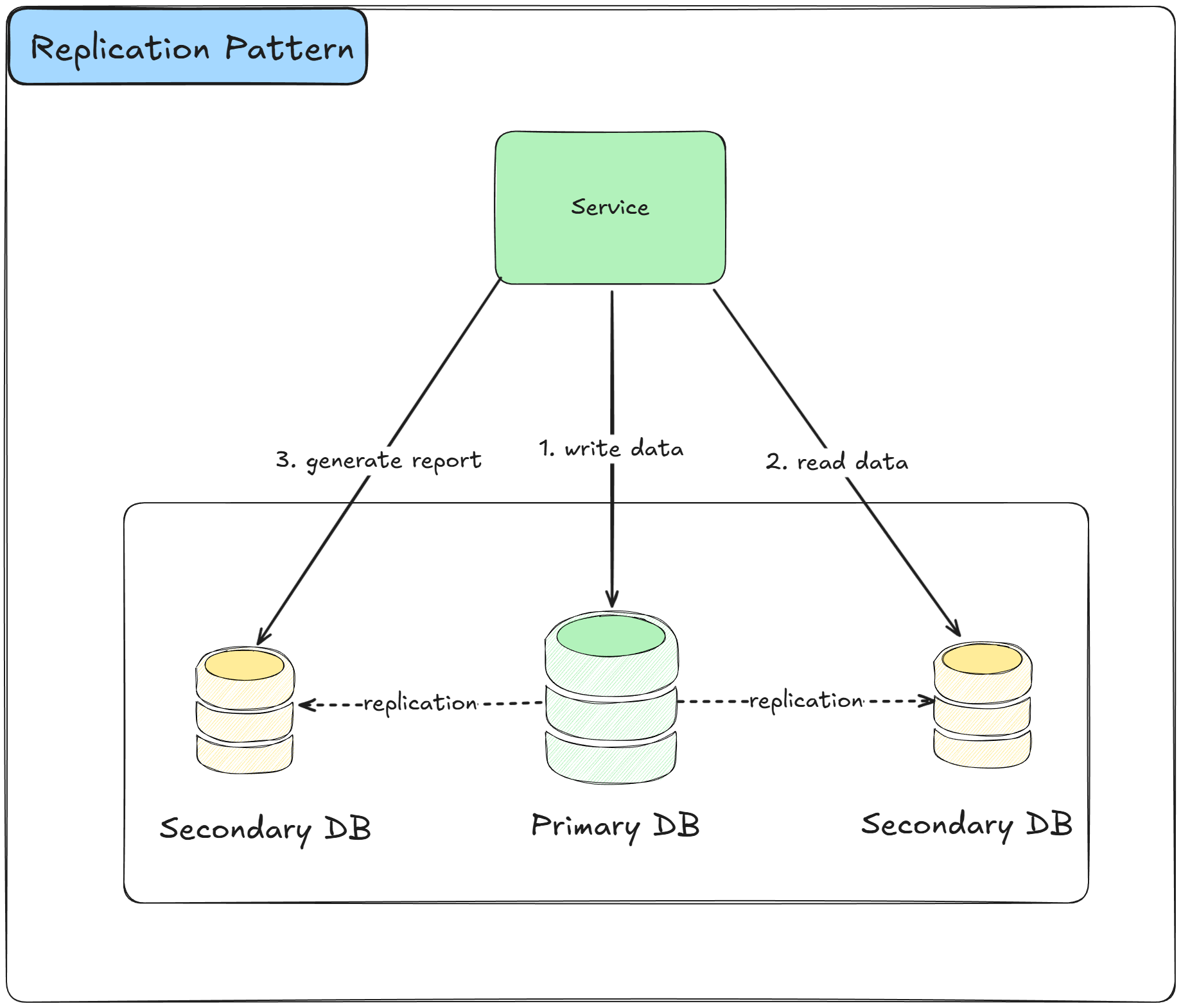
The Replication Pattern creates multiple copies of data across different nodes or databases to improve availability, fault tolerance, and read performance.
Data changes are propagated from the primary node to replica nodes, ensuring that multiple copies stay synchronized and the system can continue operating even if some nodes fail.
How it works:
- A primary node receives all write operations and serves as the authoritative source of data
- Changes made to the primary are replicated to one or more replica nodes automatically
- Replication can be synchronous, where writes wait for replica confirmation, or asynchronous for better performance
- Replica nodes can serve read requests, distributing query load across multiple nodes
- When the primary fails, one of the replicas can be promoted to become the new primary
- Different replication topologies exist: primary-replica, multi-primary, and peer-to-peer replication
- The pattern often combines with sharding, where each shard has its own replication setup
Benefits:
- Improves read performance by distributing queries across multiple replica nodes
- Increases availability as the system continues operating if the primary node fails
- Provides disaster recovery capabilities with geographically distributed replicas
- Enables zero-downtime maintenance by taking replicas offline without affecting service
- Protects against data loss through multiple copies of critical data
Drawbacks:
- Introduces eventual consistency where replicas may temporarily have stale data
- Increases storage costs as data is duplicated across multiple nodes
- Adds complexity in handling failover and ensuring replicas are properly synchronized
- Can create conflicts in multi-primary setups requiring complex resolution logic
Use cases:
- High-availability systems requiring continuous operation despite hardware failures
- Global applications serving users from multiple geographic regions with low latency
- Read-heavy workloads where distributing queries improves overall system performance
- Disaster recovery scenarios requiring data copies in different data centers
- Systems requiring point-in-time recovery or backup replicas for data protection
Summary
Distributed system design patterns provide proven solutions to common architectural challenges, but each comes with important trade-offs.
For example:
- The API Gateway simplifies client communication but introduces a potential bottleneck.
- Event-driven patterns like Publish/Subscribe and Outbox enable loose coupling but create eventual consistency.
- CQRS and Sharding improve performance at the cost of increased complexity.
Understanding these trade-offs and knowing when to apply each pattern is the essential skill of every architect.
The right architectural decision depends on your specific context, constraints, and whether you can accept the trade-offs that come with each pattern.
Hope you find this newsletter useful. See you next time.
Comments